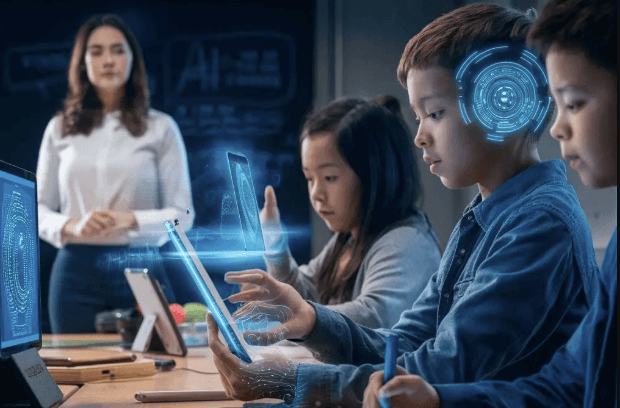

AI tutors offer adaptive pacing, tailored feedback, and data-driven decisions to fit each learner. They build transparent student models and surface insights for teachers, while prioritizing privacy and equitable access. Safety benchmarks and reproducible studies guide implementation. Educators and parents should align goals, assess skills, and establish privacy controls before adopting such tools. As schools weigh benefits against concerns, a careful, evidence-based approach remains essential to move forward.
What AI Tutors Change in the Classroom
AI tutors alter classroom dynamics by personalizing pacing, feedback, and supports to each learner’s needs.
They shift instructional control toward data-informed decisions, adjust workloads, and surface insights for teachers and administrators.
Privacy concerns and equity implications arise as data use expands, requiring transparent practices, robust safeguards, and inclusive design to ensure fair access and protect student rights without compromising learning outcomes.
How Personalization Works in AI Tutoring
Personalization in AI tutoring hinges on translating student data into targeted, real-time adjustments.
The system builds a transparent student model, tracking mastery, pacing, and preferences to tailor tasks and hints.
Adaptive feedback guides correct trajectories, while granular diagnostics reveal why mistakes occur.
This approach centers user autonomy, enabling learners to steer progress with clarity, confidence, and measurable, data-driven growth.
Evaluating AI Tutors: Metrics, Evidence, and Safety
Evaluating AI tutors builds on the observed capabilities of personalized systems by focusing on verifiable outcomes, robust evidence, and clear safety benchmarks.
The approach prioritizes measurable learning gains, rigorous validation, and transparent risk assessments.
Key concerns include data privacy and student engagement, ensuring implementations respect boundaries while optimizing accessibility, equity, and trust in autonomous support.
Practitioners rely on dashboards, audits, and reproducible studies to guide adoption.
Getting Started With AI Tutoring: Steps for Educators and Parents
Getting started with AI tutoring involves clear, stepwise guidance for both educators and parents to ensure safe, effective use. Practitioners map learning goals aligned to curricula, assess initial skill levels, and select adaptable tools. Transparent analytics support progress monitoring, while privacy controls safeguard data. Parent engagement ensures consistent practice, feedback loops, and sustainable routines, enhancing outcomes without compromising autonomy.
Frequently Asked Questions
How Do AI Tutors Handle Student Privacy and Data Security?
AI tutors implement strict privacy safeguards and data encryption, ensuring student information is collected, stored, and used with explicit consent. They prioritize user-centered practices, transparency, minimized data sharing, and continuous security audits to protect learning progress and identities.
Can AI Tutors Replace Human Educators in the Classroom?
AI tutors cannot fully replace human educators; they enable scalable classroom integration, support personalized learning, and handle routine tasks, yet require careful data privacy, security implications assessment, ongoing teacher oversight, and value-based, student-centered decision making.
What Are the Costs and Licensing Models for AI Tutoring?
Approximately 60% of schools report annual edtech licensing cost variability; cost models and licensing options vary. It discusses privacy implications, data security considerations, and practical, user-centered approaches to affordability, transparency, and freedom in choosing AI tutoring solutions.
Do AI Tutors Accommodate Students With Special Needs?
AI tutors can accommodate students with special needs through adaptive interfaces, multimodal supports, and accessible content; this enhances accessibility inclusion while prioritizing data privacy, performance metrics, and user-centric customization for equitable learning opportunities.
See also: AI Transforming Gaming Experiences
How Reliable Are AI Tutors Across Different Subjects?
A recent study shows AI tutors achieve 85% accuracy on standardized tasks, illustrating respectable reliability. AI reliability varies, but cross subject efficacy remains strong; steady improvements are needed. Users seek practical, data-driven guidance for diverse learning needs.
Conclusion
AI tutors redefine classrooms with adaptive pacing, tailored feedback, and transparent student models; they illuminate progress, adjust workload, and surface actionable insights for teachers and administrators. They uphold privacy, equity, and safeguards while grounding decisions in clear data and reproducible study. They offer evaluative metrics, safety benchmarks, and practical guidelines. They empower educators, parents, and students to align goals, assess skills, and practice ethically. They enable consistent, personalized practice, facilitate informed decisions, and sustain trustworthy, data-driven improvement.